Assistant Research Professor · Electrical & Computer Engineering · NC State

AI-Native FutureG
Networks.

Dr. Ron's research primarily focuses on designing and building AI-Native FutureG Networks and Systems spanning Open RAN, AI-RAN, and Non-Terrestrial Networks (NTN)—bringing together AI models, programmable software-defined networking, experimental prototyping, and real-world 5G network data collected from 115 cells in Texas to enable intelligent systems that can sense environmental conditions, forecast future network states, and autonomously optimize networks performance toward the ambitious performance targets envisioned for 6G.

Open RAN & AI-RAN Standards-Grounded AI LEO & NTN
Portrait of Dr. Dara Ron
Researching autonomous 6G infrastructure
NSF-Funded Research AI-Native RAN and NextG wireless systems
Research Translation AI models deployed and validated on O-RAN testbeds
Real-World 5G 115-cell operational 5G dataset replayed through O-RAN systems
IEEE/ACM Publications 25+ Peer-Reviewed Publications
Research Portfolio

One research agenda. Three connected pillars.

01 Core Research

AI-Native Open RAN

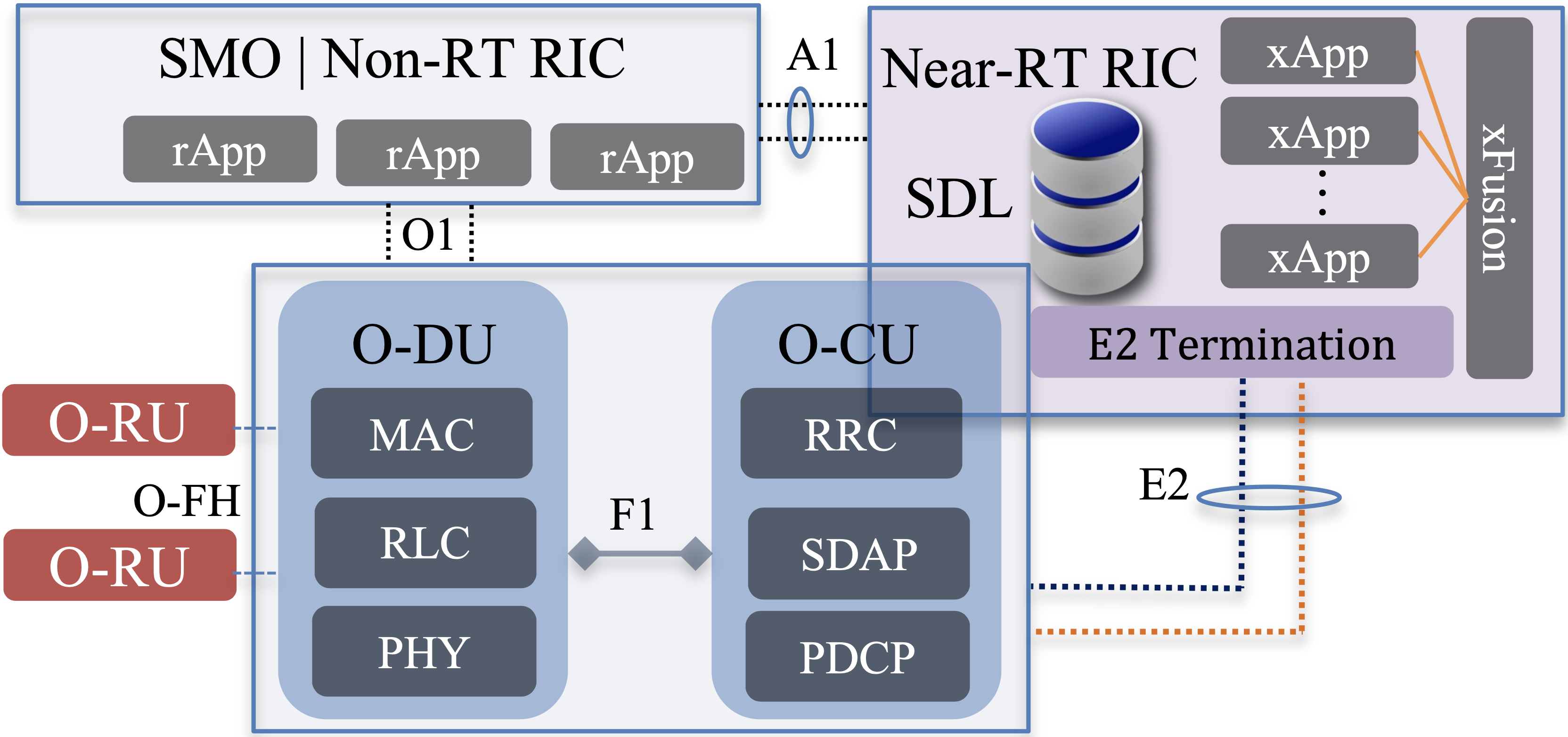
Develop O-DU dApps, near-RT RIC xApps, and non-RT RIC rApps for service classification, jamming and interference detection, and future KPM forecasting. Integrate knowledge extracted from 3GPP, ITU, and O-RAN standards with real-time KPMs from O-FH, F1, E2, O1, and A1 interfaces to enable AI agents to reason about network conditions, make informed decisions, and verify actions before safely acting on the RAN—eliminating trial-and-error learning in live networks.

  • Operational KPM forecasting, diagnosis, and anomaly detection
  • O-DU dApps, near-RT RIC xApps, non-RT RIC rApps, and AI agents
  • Autonomous interoperability across multi-vendor O-RAN components
  • Closed-loop network control under latency and SLA constraints
Open RANAI-RANRICsMulti-Task LearningLLMsAI Agents
02 Timely Research

AI-RAN

Develop AI-RAN compute infrastructure to support a broad range of AI inference services, such as conversational AI, vision-language applications, autonomous robotics, video analytics, coding assistants, and AI-for-RAN applications, that require low-latency inference and sufficient compute and memory capacity to deliver high token throughput and meet AI service-level agreements (SLAs).

  • CPU/GPU/NPU infrastructure design for latency-sensitive and high-throughput AI workloads
  • AI workload forecasting, service admission, model placement, and resource provisioning
  • Joint orchestration of radio, compute, memory, and accelerator resources across AI-RAN nodes
  • Distributed AI inference and workload migration across O-DU, RIC, and edge AI platforms
AI-for-RANAI-on-RANAI-and-RAN
03 Core Research

LEO/Space Networks

Develop intelligent and resilient LEO satellite networks through constellation and ISL design, topology/routing optimization, spectrum coexistence with radio astronomy, and end-to-end transport-aware handover. Develop lunar digital twins to model, emulate, and evaluate Earth-Moon communication and networking architectures for future NASA lunar missions.

  • LEO satellite constellation construction, ISL design, and topology/routing optimization
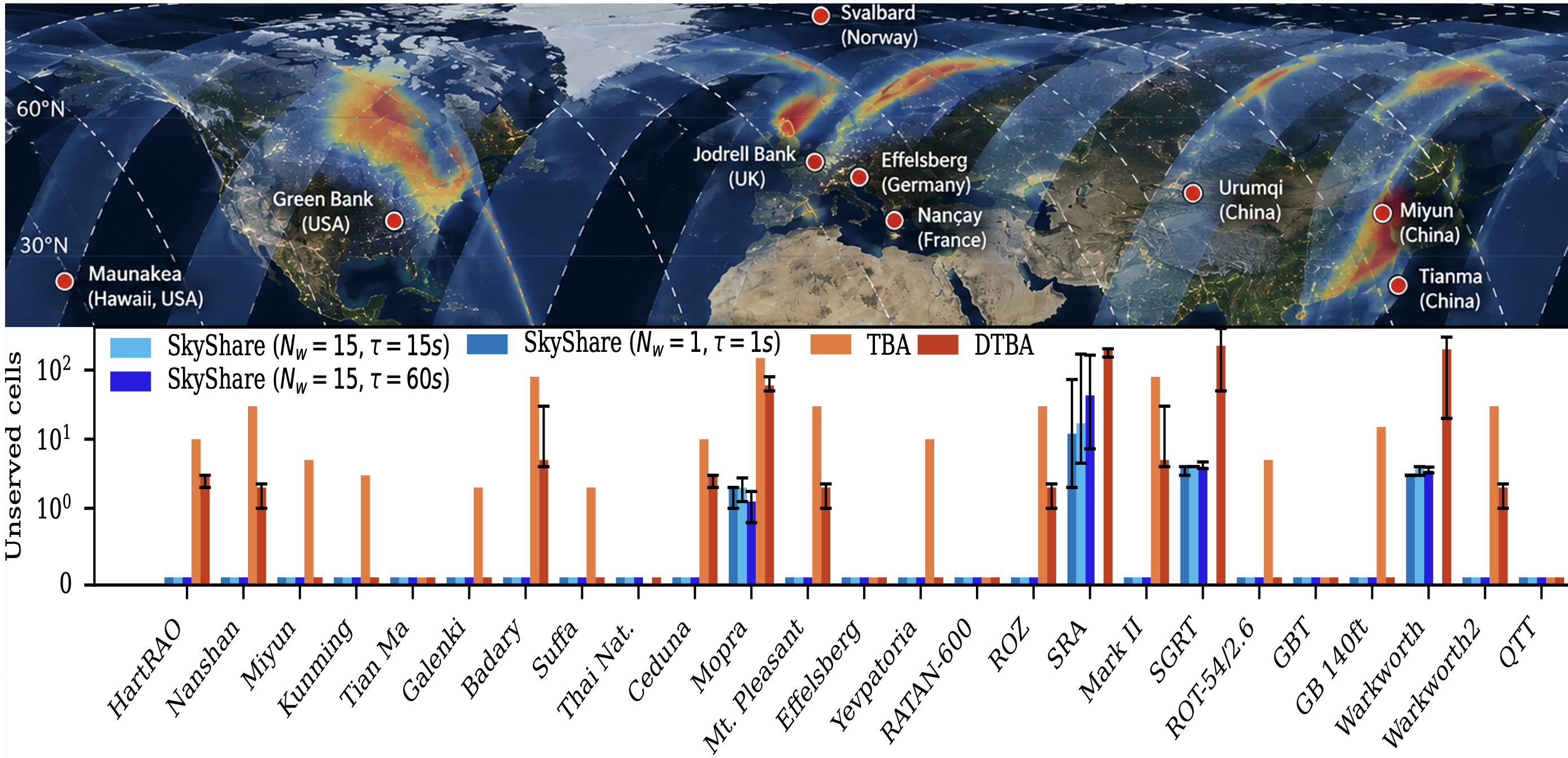
  • Spectrum coexistence between LEO satellites and radio astronomy
  • End-to-end transport-aware handover design for rapidly changing satellite networks
  • Lunar digital twins for Earth-Moon communication, networking, and mission-oriented performance evaluation
LEO SatellitesTopology/RoutingLEO HandoverLunar Digital Twins
Research Approach

Important Problems → Theories/Algorithms → Simulations → O-RAN Testbed Validation.

Research addresses important problems in wireless networks by formulating real-world problems mathematically, developing theories and algorithms, validating them through high-fidelity simulations and digital twins, and demonstrating their practical impact using O-RAN testbeds.

Public AI Assistant

AI Chat: a general-purpose AI assistant.

A public general-purpose AI assistant for questions across science, engineering, mathematics, programming, artificial intelligence, writing, research, education, and everyday problem solving .

AI Chat General-purpose AI assistant
Research Prototype
AI

Welcome to AI Chat.

Featured Systems

Research Highlights.

Each project is presented around the research problem, my contribution, experimental evidence, and the system or publication output—so the technical trajectory is immediately visible.

Experimental Research Infrastructure
01

Operational 5G Data

City-scale measurements across 115 operational cells for network forecasting, diagnosis, and AI evaluation.

Operational KPMs
02

Open RAN Testbed

O-RU → O-DU/O-CU → Near-RT RIC → xApps/rApps for cross-layer experimentation, intelligence, and control.

Programmable RAN
03

AI-RAN Platform

Shared RAN and AI workloads with CPU/GPU resource monitoring, scheduling, and SLA-aware orchestration.

Compute + RAN
04

Space Network Emulator

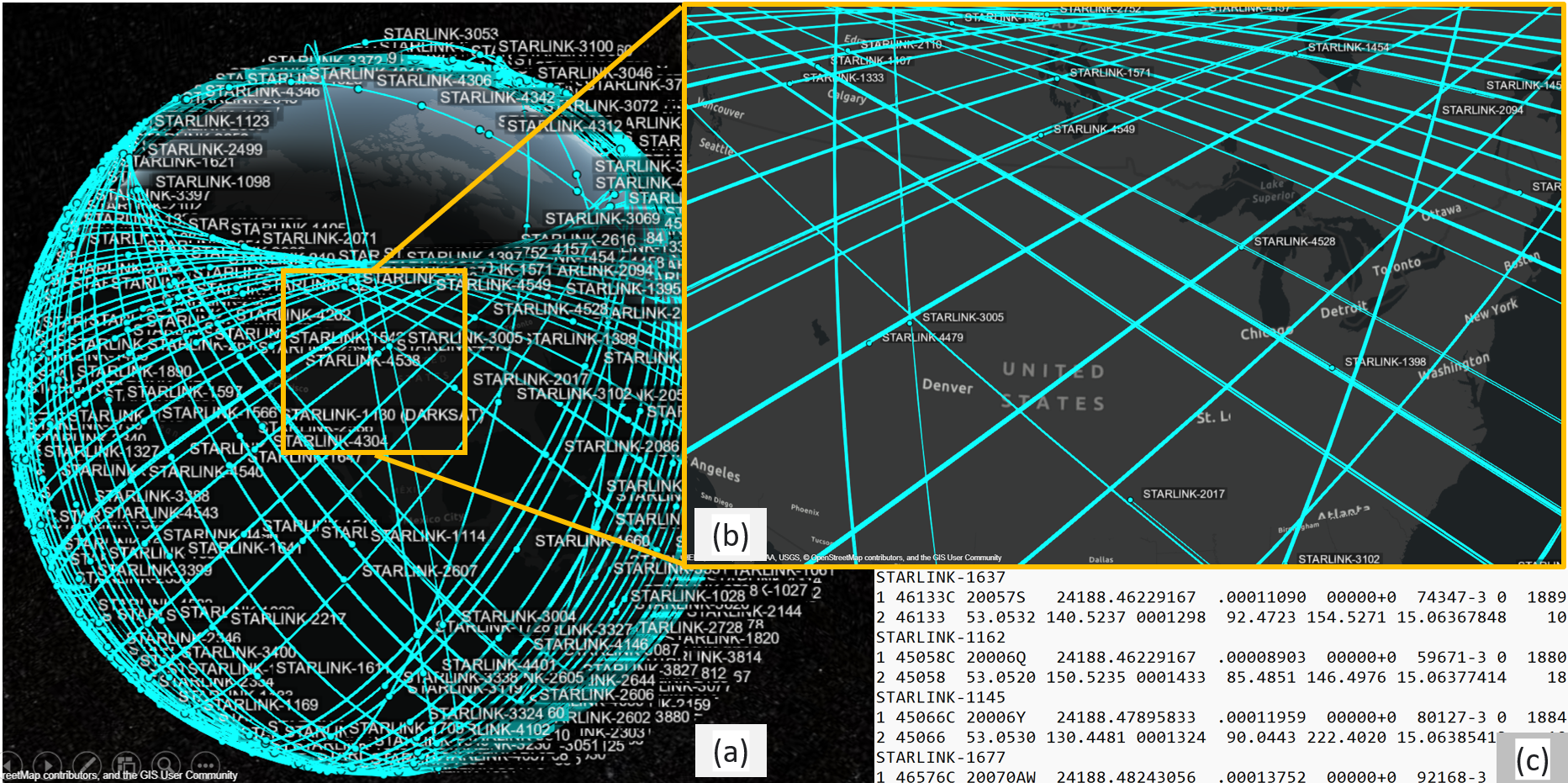
TLE-driven constellations, dynamic ISLs, routing, propagation, and end-to-end performance evaluation.

LEO / NTN
Interactive Research Demo

SpaceNet: Dynamic LEO network emulation.

This demonstration visualizes a realistic Starlink-based network emulator and the Dynamic Time-Expanded Graph–based Optimal Topology Design (DoTD) method. The system creates time-varying inter-satellite links and applies end-to-end routing between geographically distributed ground stations.

Real TLE dataRealistic orbital dynamics
Dynamic ISLsTime-varying network topology
Routing + KPMsCapacity, latency, hops, churn
Read IEEE INFOCOM Paper ↗
LEO Networking · SpaceNet Research Demo Time-Dependent Network Topology Optimization
Interactive Research Demo

AI-Native O-RAN: AI Agent for Autonomous Network Control.

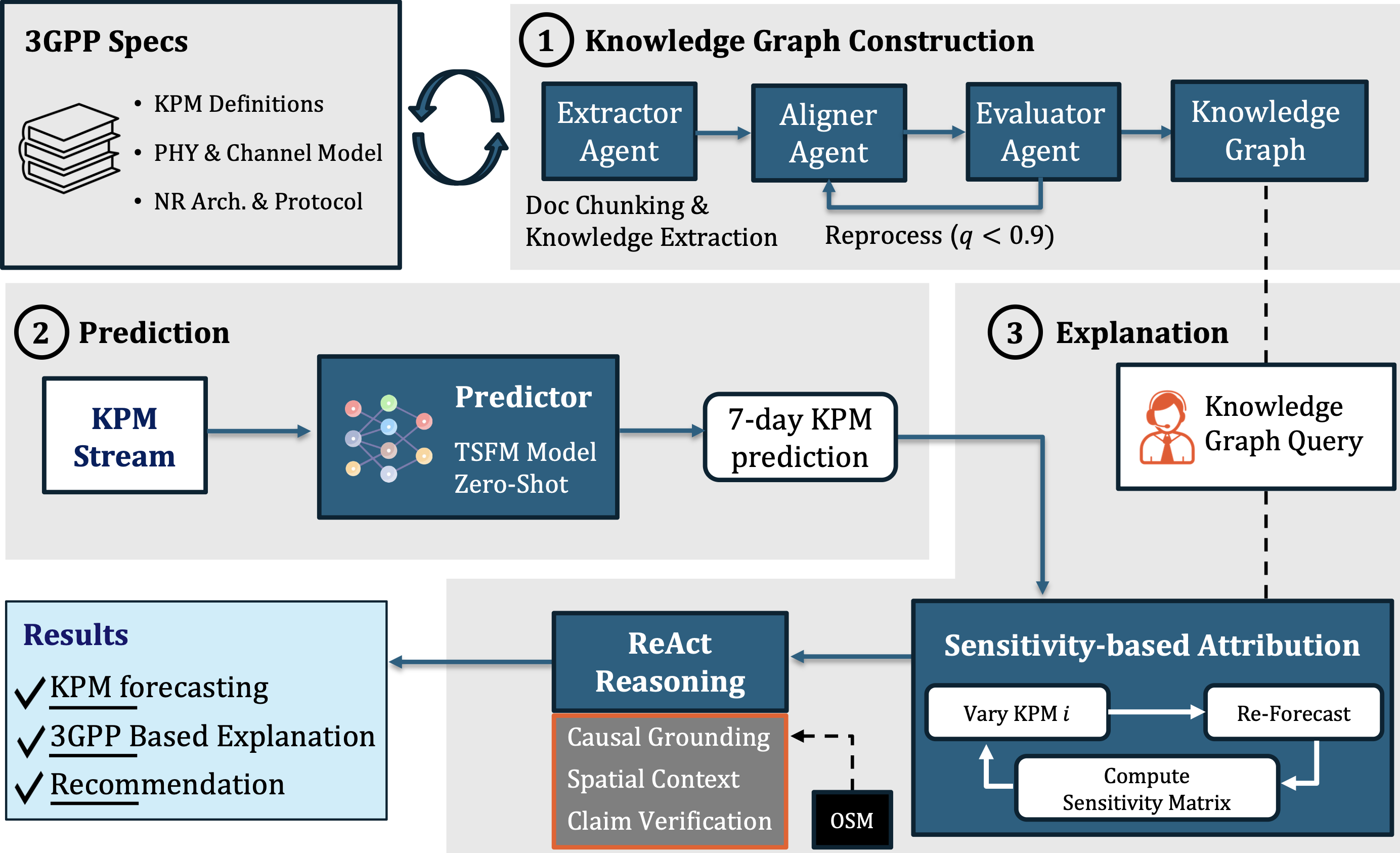
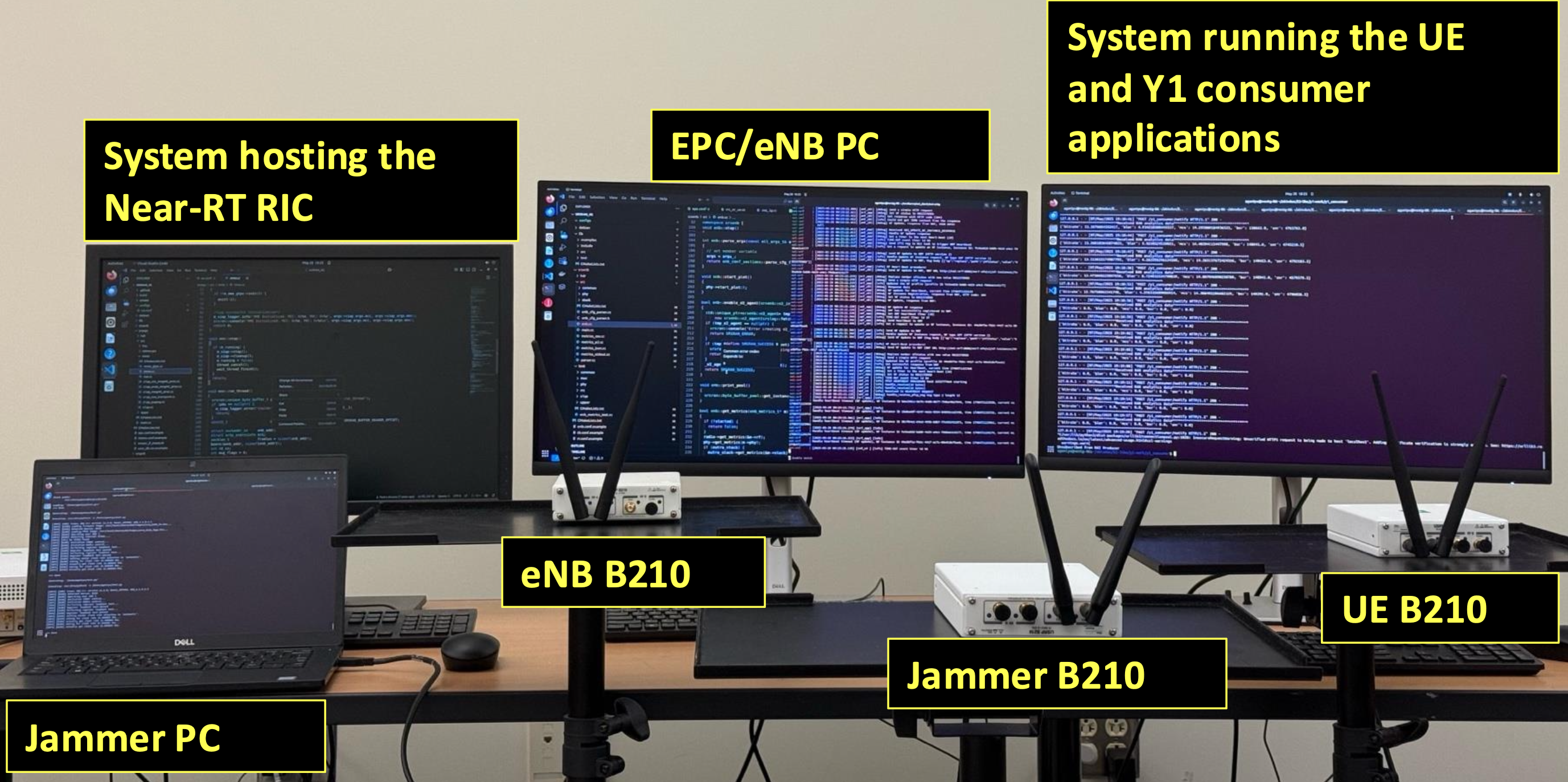
This testbed demonstrates AI-agent-driven autonomous network control in a programmable O-RAN system. The AI agent observes real-time network KPMs and channel conditions, integrates 3GPP knowledge for standards-grounded reasoning, analyzes network performance, and autonomously generates control decisions through a closed-loop workflow.

KPMs Continuous network observation
3GPP Knowledge Standards-grounded AI reasoning
AI Agent Autonomous closed-loop control
Explore AI-Native Research
AI Agent · 3GPP Knowledge · O-RAN · Closed-Loop Control Autonomous AI-Agent Network Control
Research Impact

Advancing intelligent, open, and connected NextG networks.

0.8 m

O-RAN Positioning

Demonstrated sub-meter positioning with a 1 ms update interval on an experimental O-RAN system.

115 Cells

Scalable RAN Intelligence

Advanced scalable AI-driven RAN intelligence using city-scale measurements from operational 5G networks.

70.47%

LEO Network Capacity

Improved LEO network capacity through dynamic topology optimization compared with the +Grid baseline.

Open Source

SpaceNet Testbed

Released open-source code to support reproducible LEO satellite networking research and community experimentation.

View SpaceNet on GitHub →
Recognition ACM WiseML 2024 Best Paper Award

Wireless-powered multi-channel backscatter communications under jamming using cooperative reinforcement learning.

Media Feature TelcoAgent Featured by RCR Wireless News

TelcoAgent highlighted for scalable 5G multi-KPM forecasting and 3GPP-grounded explainable AI for network automation.

Read the Feature →
Research Funding

Current Projects

NSF
U.S. National Science Foundation
NSF VINES · Track 1Senior Personnel

ARMANI: AI-Native RAN Management and Intelligence for Next-Generation 6G Networks

A collaborative project developing AI-native technologies for monitoring, management, and control of future radio access networks, including intelligent Open RAN architectures, autonomous network operation, and trustworthy AI.

Award2549233
RoleSenior Personnel
InstitutionNC State University
View NSF Award ↗
Selected Publications

Selected publications by year and venue.

Representative peer-reviewed work showing the evolution of my research across wireless AI, intelligent networking, Open RAN, and non-terrestrial networks.

View Full Publication List ↗
2026Recent work
2026
IEEETransactions on Vehicular Technology

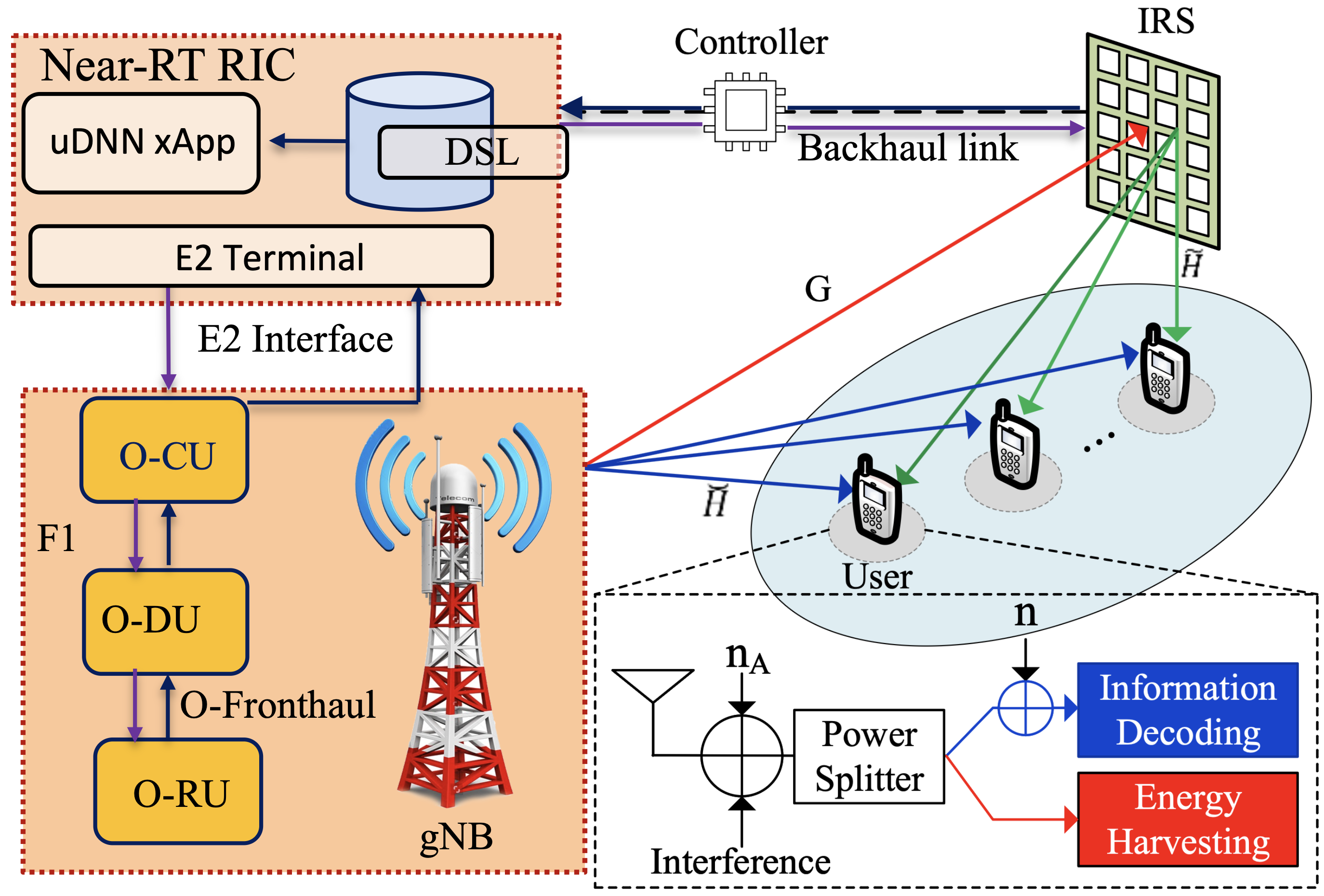
O-NIIS: Open and Intelligent IRS-SWIPT for Wireless Energy-Efficiency Enhancement

D. Ron et al.

IRSSWIPTEnergy EfficiencyWireless AI
2026
IEEETransactions on Instrumentation and Measurement

Deep Reinforcement Learning-Based Active Sensing on a Bicycle for Vehicle Tracking

W. Jeon, D. Ron, J.-R. Lee

Active SensingKalman filtersAI/DRL
2025LEO networking · O-RAN security · UAV networks
2025
IEEEMILCOM 2025Demonstration

Jamming Smarter, Not Harder: Exploiting O-RAN Y1 RAN Analytics for Efficient Interference

A. Ganiyu, D. Ron et al.

O-RAN SecurityJammingTestbed
2025
IEEETransactions on Green Communications and Networking

Intelligent Energy Efficiency and Service Reliability Optimization for UAV-Aided Terrestrial Networks

D. Ron and J.-R. Lee

UAVSAGINResource OptimizationReliability
2024Experimental wireless systems · reinforcement learning
2024
ACMWiNTECH

Experimental Validation of a 3GPP Compliant 5G-Based Positioning System

S. Dhungel, G. Duggal, D. Ron et al.

5GPositioning3GPPExperiment
2024
ACMWiseMLBest Paper Award

Wireless-Powered Multi-Channel Backscatter Communications Under Jamming: A Cooperative Reinforcement Learning Approach

D. Ron and K. Zeng

BackscatterAnti-JammingReinforcement Learning
2022–2020Foundational AI for wireless resource optimization
2022
IEEETransactions on Vehicular Technology

DNN-Based Dynamic Transmit Power Control for V2V Communication Underlaid Cellular Uplink

D. Ron and J.-R. Lee

V2VDNNPower Control
2021
IEEETransactions on Vehicular Technology

DRL-Based Sum-Rate Maximization in D2D Communication Underlaid Uplink Cellular Networks

D. Ron and J.-R. Lee

D2DDeep RLOptimization
2020
IEEEIEEE Internet of Things Journal

Performance analysis and optimization of downlink transmission in LoRaWAN class B mode

D. Ron et al.

LoRaWANPerformance AnalysisOptimization
Full record: This is a selected list. For the complete and most current publication record, citation counts, and links, please visit Google Scholar.
Research Evolution

Toward distributed AI infrastructure across terrestrial and space networks.

Current

AI-RAN Compute

Shared RAN and AI computing · dynamic resource allocation · SLA-aware orchestration · edge intelligence

Next

Physical AI over AI-RAN

Real-time inference · robots and autonomous systems · distributed AI execution · latency-aware compute orchestration

Research Agenda

Space AI Data Centers

Orbital computing · LEO AI infrastructure · workload placement · energy-aware computing · space-terrestrial AI services

About

Research at the intersection of AI, wireless systems, and programmable networks.

I am an Assistant Research Professor in Electrical and Computer Engineering at NC State University. My research focuses on Open RAN, AI-RAN computing, trustworthy wireless intelligence, and LEO/NTN space networks.

A consistent theme of my work is moving beyond standalone algorithms toward deployable systems that integrate AI, communication, and computing and can be experimentally validated under realistic network conditions.

Current Role Assistant Research Professor
Department Electrical & Computer Engineering
Institution NC State University
Location Raleigh, North Carolina
Teaching & Mentoring

Connecting research with student training.

Teaching ECE 301 · Linear Systems NC State University
Mentoring Undergraduate · M.S. · Ph.D. Researchers Research problem formulation, system development, experimentation, and technical writing
Student Research Open RAN · AI-RAN · Wireless AI · LEO/NTN Algorithms, AI models, testbeds, and experimental systems
Collaboration

Building the next generation of intelligent wireless systems.

I welcome research collaborations, student inquiries, industry partnerships, invited talks, and joint proposal opportunities in AI-RAN, Open RAN, wireless AI, and NTN.